1. Standard Tamil Keyboard Layout
High resolution image suitable for printing.
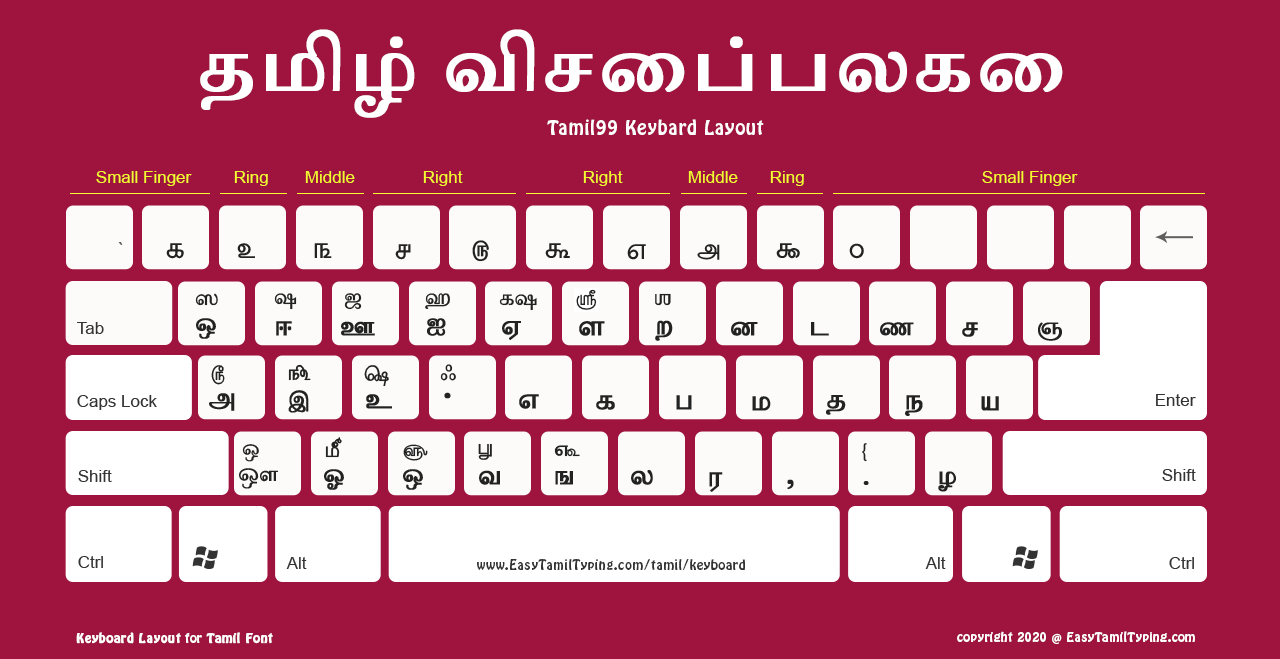
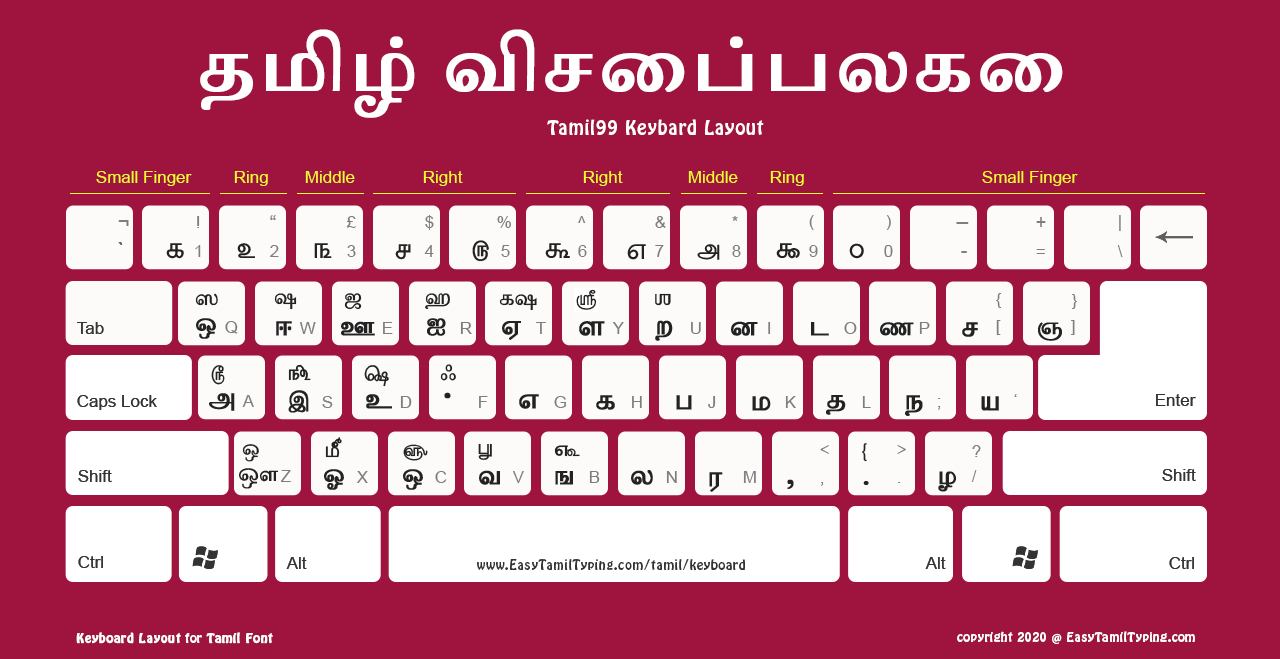
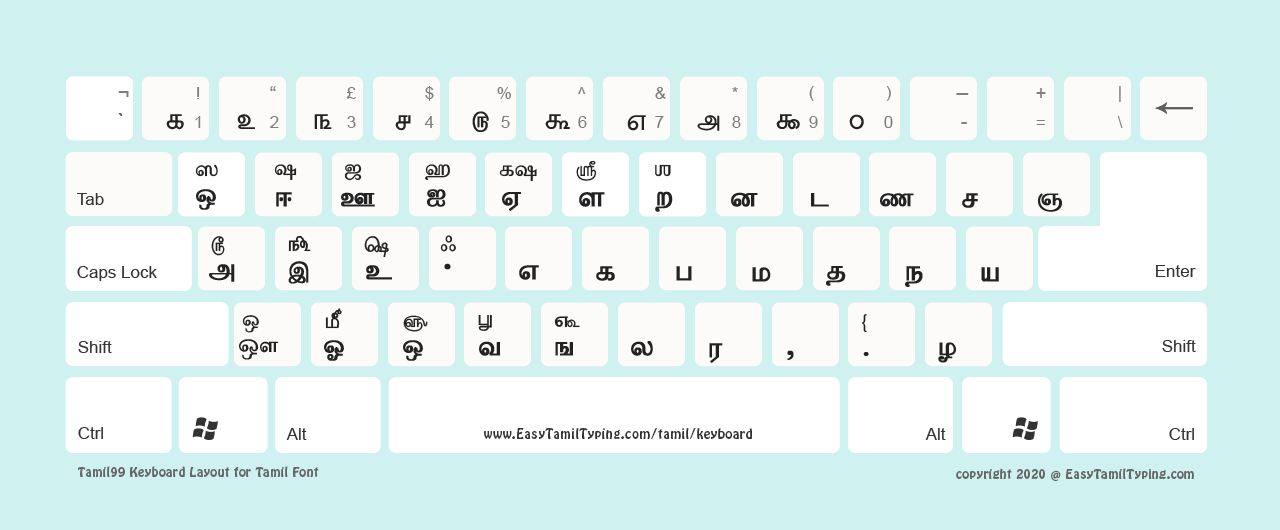
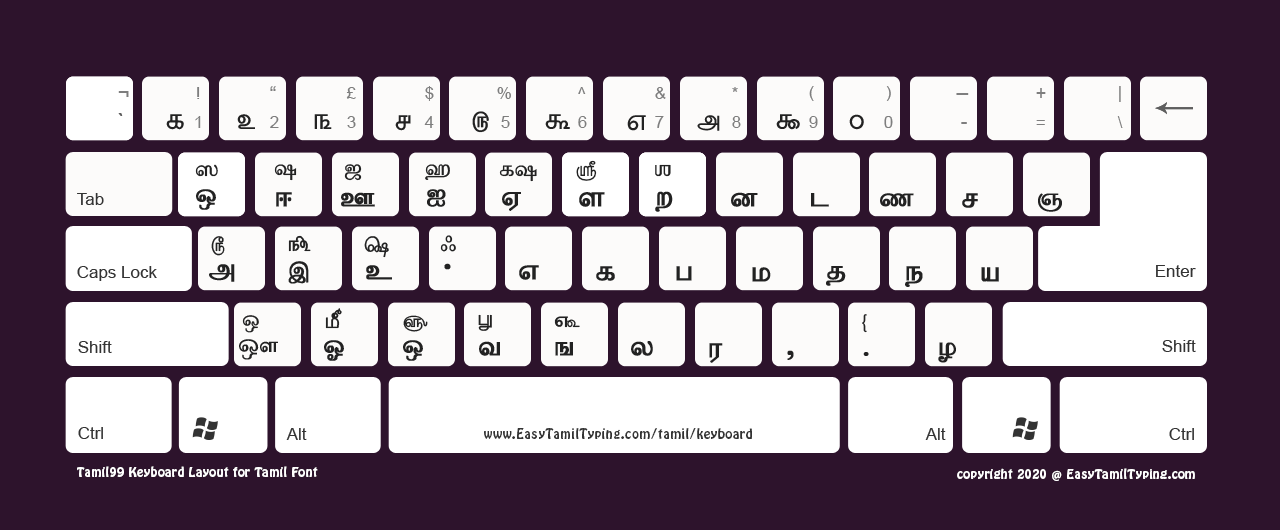
We have five different Tamil keyboard layouts for you to download on your computer. Once downloaded — you can use it as a reference to type in Tamil either on Word document or any other text editor. You also need to download the matching Tamil fonts.
High resolution image suitable for printing.
High resolution image suitable for printing.
High resolution image suitable for printing.
High resolution image suitable for printing.
High resolution image suitable for printing.
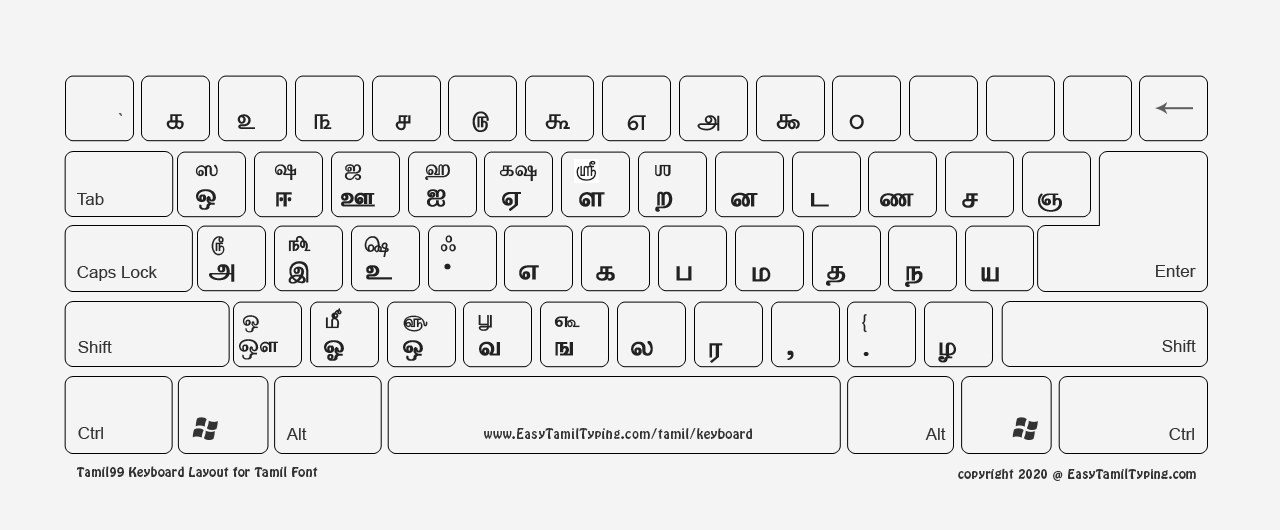
Here's our systematic approach to setting up Tamil typing.
Acquire your Tamil font — browse our curated fonts library and install the ideal typeface for your Tamil writing needs.
Obtain your keyboard reference using this reliable download process:
Click on your preferred keyboard layout from our collection
Right-click when the high-resolution image appears
Choose "Save image as..." and save to your preferred location
Establish your typing environment by opening any word processor and selecting the Tamil font you installed earlier.
Launch your Tamil writing session! Position your keyboard image for easy viewing while you compose beautiful Tamil text.
Expert recommendation: Limited screen space? Our keyboards deliver outstanding print clarity — print one for a reliable desktop reference that's always ready when you need it!
Designed for Tamil99 keyboard layout — accurately mapped to provide an authentic Tamil typing experience with correct character placement.
Meets professional standards — designed for typists, and businesses requiring error-free Tamil documentation.
Supports various display formats — perfect for presentations, reference guides, digital displays, and high-quality printing.
Offers unrestricted licensing — use freely for academic research, commercial projects, educational materials, or personal correspondence.
Two games, in particular, are often cited as the pioneers of the tower defense genre: "Eternal Realms" (2000) and "The Kingdom" (2000). While not directly related, both games shared a similar concept: players would build defensive structures, or towers, to protect a kingdom or a specific area from incoming enemies.
The Y2K scare and the subsequent rise of online gaming created a perfect storm that gave birth to the tower defense genre. The genre's evolution over the past two decades is a testament to the creativity and innovation of game developers during this period.
The next time you find yourself defending a kingdom or a futuristic city from an onslaught of enemies, take a moment to appreciate the humble beginnings of the tower defense genre and the creative spark that ignited it during the dawn of the new millennium. y2k tower defense
As the clock struck midnight on December 31, 1999, the world held its breath, bracing for the impending doom of the Y2K bug. The widespread fear of widespread computer failures and chaos led to a sense of urgency and unease, but it also sparked a creative explosion in the gaming industry. One genre that emerged during this time, and would go on to become a staple of the gaming world, was the tower defense game.
The Y2K scare coincided with the dawn of the widespread internet adoption and the emergence of online gaming. As people stockpiled food, water, and other essentials, they also began to explore the vast expanse of the internet, seeking entertainment, community, and distraction from the impending doom. Two games, in particular, are often cited as
As we look back on the early days of tower defense, it's clear that the genre's success was not just a result of circumstance but also a reflection of the gaming industry's ability to adapt and thrive in times of uncertainty. Today, tower defense games continue to captivate audiences worldwide, offering a unique blend of strategy, replayability, and fun.
The genre's popularity peaked around 2008-2010, with the release of games like "Defense Grid: Hold the Front Line" (2008) and "Kingdom Rush" (2010). These games solidified tower defense as a staple of the gaming industry, paving the way for modern titles like "Plants vs. Zombies" (2009) and "Bloons TD Battles" (2011). The genre's evolution over the past two decades
"The Kingdom," developed by a solo developer, Alexander "Xa" Avtushko, took a more straightforward approach. Players built towers to protect a kingdom from invading monsters, with a focus on upgrading and optimizing their defensive strategy.
"Eternal Realms," developed by a team of students at the University of California, Los Angeles (UCLA), introduced many of the core elements that would define the tower defense genre. Players could build various types of towers, each with its own strengths and weaknesses, to fend off waves of enemies. The game featured a simple, yet addictive gameplay loop that would become a hallmark of the genre.
 Sambhu Raj Singh ·